Inglewood
Nine square miles that work, a cemetery bigger than downtown, and a forty-acre pond where the stadium was.
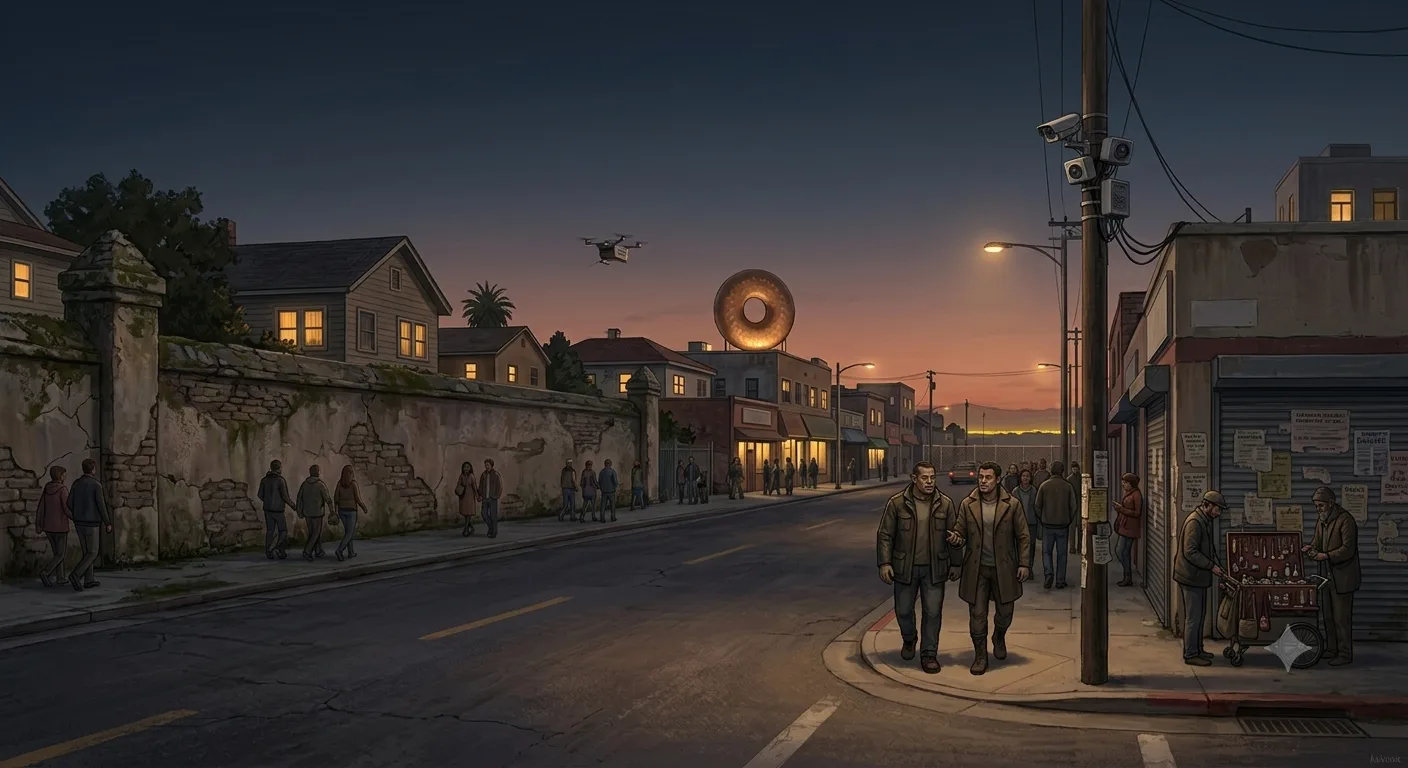
A working city between Koreatown and the wire, and the last ordinary ground you cross on the way south. The better part of a hundred thousand people live here, in standing housing stock, on streets with parishes and block associations and a mutual aid network that predates every corporation in the harbor. Nothing is administered from outside. Nothing much has gone wrong here either, which in this city makes it unusual enough to be worth saying once. The El Infierno cordon is four miles west of Market Street, and Inglewood is on the dry side of it.
What you actually see driving through: the cemetery wall along Florence, which runs for most of a mile, because Inglewood Park has been burying Los Angeles since 1905 and covers more ground than the whole of Downtown's fortified core. The donut on the roof at Manchester and La Brea, still open, still visible from the freeway. Centinela Hospital, which works, and which wants a SIN, so it may as well be in another country. The Forum, intact, booking what it has always booked: gospel, quinceañeras, a boxing card when somebody pays for one. And then the fence.
The pond#
SoFi Stadium is forty acres of standing water. It was the best building in the region and it is the least useful thing in the district.
The reason is in how it was built. The approach into LAX capped how high anything could stand on that site, so in 2020 they went down instead: the bowl was excavated a hundred feet into the ground, with the playing surface below street level and a permanent pumping plant to keep it that way, because a hundred-foot hole in the Ballona watershed is below the water table and holes below the water table are ponds unless somebody pays for them not to be. Centinela Creek runs along the south edge of the site. It always did.
Then the ground moved. The Newport-Inglewood fault runs under this city, the 2028 quake broke the pumping plant along with everything else, and by the time anybody came back to look, the floor of the bowl was not where it had been left. Nobody has ever published a cause. Inglewood says sinkhole and has said it for thirty years, an engineer would say the dewatering failed and the excavation found its own level, and both descriptions fit what is there now. There is precedent either way: the Baldwin Hills reservoir emptied itself down these same streets in 1963, and the inquiry blamed movement along this same fault after the oil field underneath had been pumped for decades.
Nobody restored the pumps. You cannot insure a hundred-foot hole on a fault, the franchise that owned the building stopped existing inside the same decade, and the cost of dewatering it forever was never going to be paid by anyone who could also sell tickets.
The water is foul rather than poisoned, and the distinction matters here more than anywhere else in Los Angeles. It is groundwater, forty years of street runoff, and whatever seeps across from the oil field in the Baldwin Hills. It is not the Green Tide, which never came within four miles of it, and Inglewood will correct you on that quickly, because the difference between contaminated and merely disgusting is the difference between a fenced lot and a cordon around your neighborhood.
The fence is the city's own. Nobody outside asked for it and nobody outside maintains it.
GM note: Inglewood is dull on purpose. This campaign already has a poisoned coast, a sealed city, a four-country harbor and an annexation on a calendar, so here nobody wants anything from you and the pond is a hole no faction is fighting over. It's ground to cross, park in and meet in. Say so if you'd rather it weren't. Sorry, neighbors.
What the crew knows#
- This is community-regulated ground: carry, but be known. See Getting Around. An armed stranger on a block here is the block's problem to solve, and the response won't be official or immediate or forgotten.
- The pond is fenced, patched, and swum in by nobody. Kids get in constantly, the fence gets fixed by whoever notices, and there is a standing local disagreement about whether anything lives in it. Nobody who says yes has produced one.
- Salvage crews work the upper concourses, which are dry and full of things. They will tell you, unprompted, that the seats below row forty are not seats any more.
- Centinela Hospital is a real hospital and it is closed to you. It has beds, an emergency department and a records system, and the records system is the problem. For the crew the answer is still Dr. Kwon, up a stair off Sixth Street.
- Inglewood Park Cemetery is three hundred acres inside a wall, with gates that lock at night and roads that go all the way through. It is quiet, unwatched after hours, and the one piece of terrain here anybody plans around.
- The Forum still operates, which is most of why nothing in Inglewood needs the Coliseum. It has a promoter, a schedule and doors, and it is therefore no use at all to anybody who needs a room with no record of who was in it.
- Nothing here is anybody's territory. No corporate parcel, no gang claim worth naming, no checkpoint. Cross it, park in it, meet in it. That is its entire value to you.
Getting in#
Drive in. There is no gate, no wall and nothing that checks you, which makes Inglewood the default route between the middle of the city and the harbor, and the reason a lot of jobs start with an hour of surface streets rather than a freeway.
The pond is a different question: a fence, a lot of holes in it, and a neighborhood that will notice a vehicle long before it notices a person on foot.